
Five parks owned and maintained by the Meadowlakes Property Owners Association — for boating and fishing, for the children, and in memory of those who serve.
Home » Property Owners Association » Parks
The Meadowlakes Property Owners Association (the Association) owns and maintains the community parks located within the City of Meadowlakes. Parks maintenance is funded by part of the annual fees assessed from the property owners.
The parks are available from dawn to dusk to serve the community, and can be reserved for private gatherings by contacting City Hall. Use of the parks is at the users' own risk. The Association tries to maintain the parks in clean and safe condition, but the parks' environments are frequently controlled by Mother Nature, with wet, slippery conditions and local flora and fauna.
The parks are physically located among our residential homes. Please be considerate of the parks' neighbors by obeying traffic and parking rules, and by courteously observing commonsense noise, music, trash, and privacy etiquette.
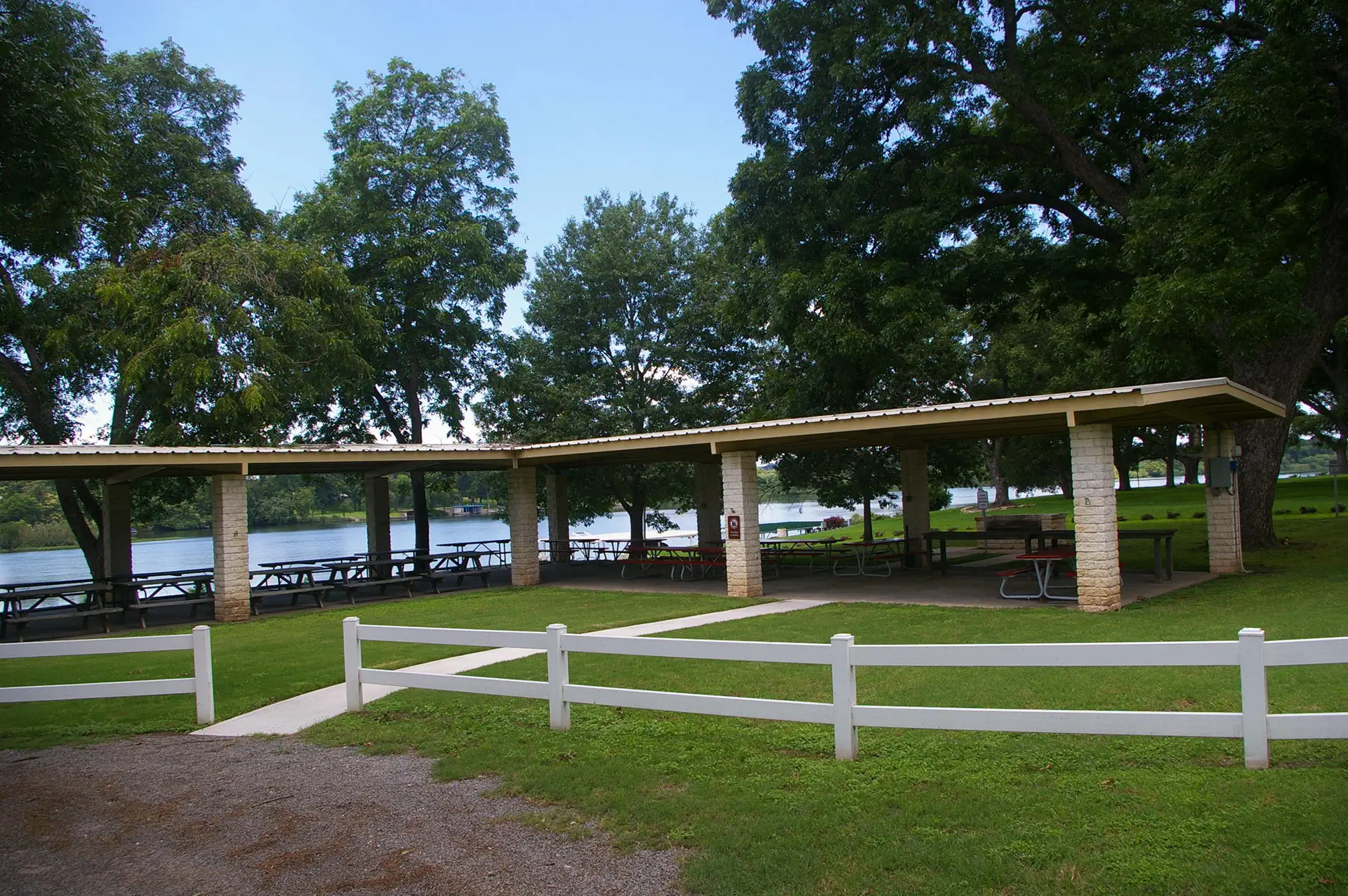
As the name implies, Lakeside Park is on the shore of Lake Marble Falls, and includes a boat ramp, an area for fishing, a covered gathering place, and a grill.
Lakeside Park provides an outdoor community activity center offering boating, fishing, picnicking, and sitting idly by the lake to pass the time. The park is not gated, but we ask that activity at the park not be started until dawn and cease at dusk for safety and for the respect of the park’s neighbors.
The boat launch provides access to Lake Marble Falls via a concrete ramp, with limited vehicle and trailer parking near the launch ramp. Users are cautioned that boat ramps are inherently slippery and the transition area between ramp and lake can be uneven.
Adjacent to the launch ramp is a large pier that some days provides great fishing — and some days not. But the pier always provides a great place to sit and enjoy the surroundings.
The covered pavilion at the park is a focal point for sharing special, community-wide occasions sponsored by the Association, such as Memorial Day, Easter, and 4th of July. The pavilion is available during park hours for private use, or it may be reserved for private functions. There is a minimal charge for reservations, and the person reserving the pavilion is responsible for clean-up after the function.
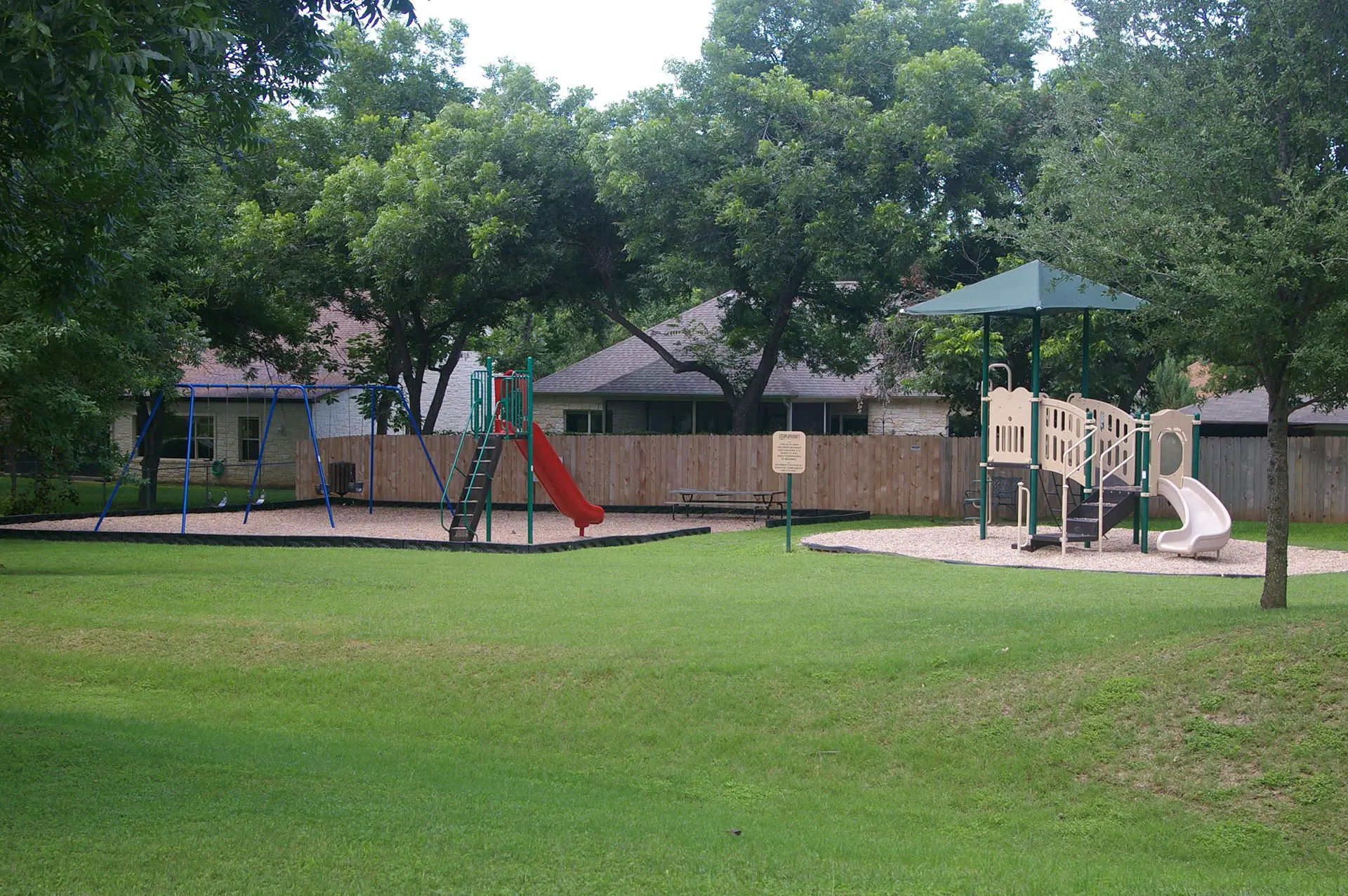
Also called the Kid’s Park, Wayne Dollar Park serves mainly the younger members of our community — the children. The park was named in honor of a longtime resident and volunteer within Meadowlakes, Mr. Wayne Dollar. The park occupies about 1 acre of greenspace, with outdoor play equipment for the children and loads of space to run around in.
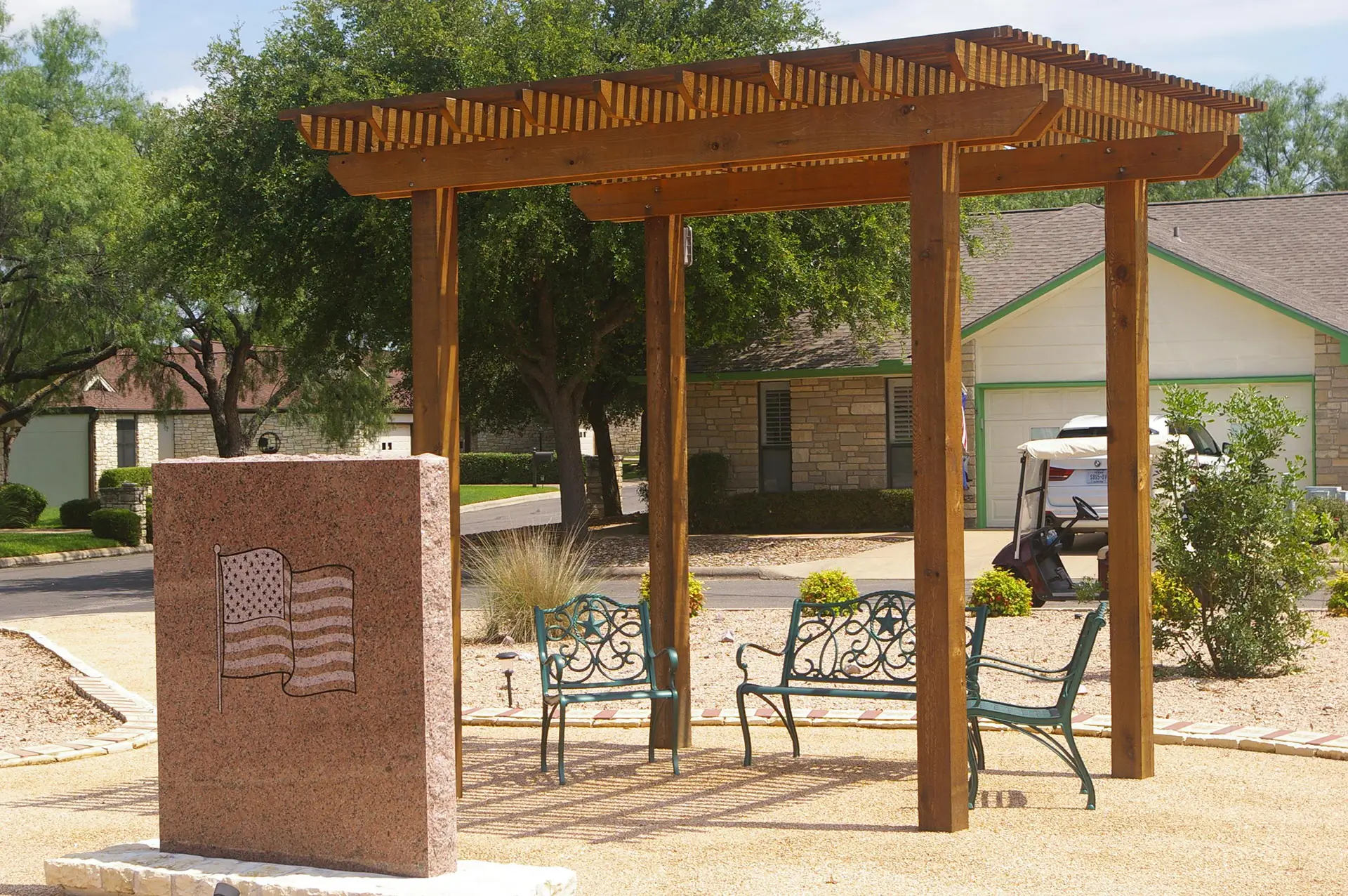
The Military Veterans Memorial Park honors the men and women who have served — and continue to serve — in our armed services, risking their all to protect our freedoms. The focal point is a granite monument bearing the memorial inscription and insignias of our armed services at the center of the park, with seating and pergola cover for visitors.
The three pathways to the monument are lined with commemorative bricks honoring and bearing the names of Meadowlakes residents and other family members who have served, or are serving, in the five branches of the United States Armed Services.

The First Responders Park is the newest park in the community (at the time of its dedication) and honors our civilian law enforcement, fire protection, and emergency medical service personnel — in our community, our state, and our nation — who risk their safety to protect ours. The focal point is a water feature adjoining the memorial bronze casting and inscription.
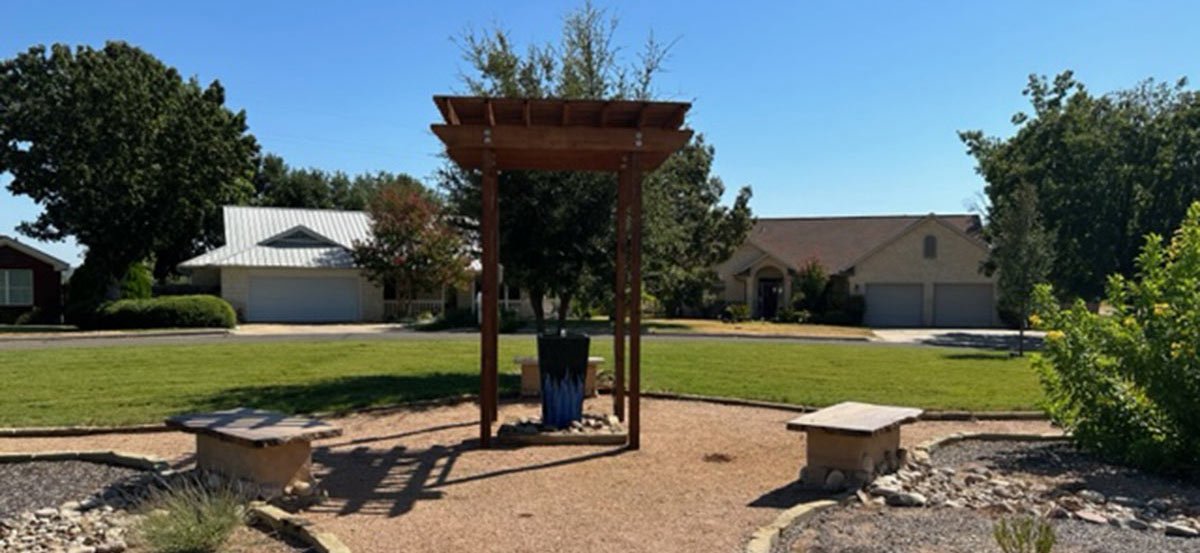
Located in the 300 block of Firestone Dr., Firestone Park is the newest of our parks for use by our residents.
We invite you and your guests to enjoy these beautiful parks and the natural beauty that makes Meadowlakes such a special place to live. Please help us keep our parks clean by disposing of trash properly and respecting park rules.
Visit the Property Owners Association section to explore more.
Meadowlakes
We firmly believe that the internet should be available and accessible to anyone, and are committed to providing a website that is accessible to the widest possible audience, regardless of circumstance and ability.
To fulfill this, we aim to adhere as strictly as possible to the World Wide Web Consortium’s (W3C) Web Content Accessibility Guidelines 2.1 (WCAG 2.1) at the AA level. These guidelines explain how to make web content accessible to people with a wide array of disabilities. Complying with those guidelines helps us ensure that the website is accessible to all people: blind people, people with motor impairments, visual impairment, cognitive disabilities, and more.
This website utilizes various technologies that are meant to make it as accessible as possible at all times. We utilize an accessibility interface that allows persons with specific disabilities to adjust the website’s UI (user interface) and design it to their personal needs.
Additionally, the website utilizes an AI-based application that runs in the background and optimizes its accessibility level constantly. This application remediates the website’s HTML, adapts Its functionality and behavior for screen-readers used by the blind users, and for keyboard functions used by individuals with motor impairments.
If you’ve found a malfunction or have ideas for improvement, we’ll be happy to hear from you. You can reach out to the website’s operators by using the following email
Our website implements the ARIA attributes (Accessible Rich Internet Applications) technique, alongside various different behavioral changes, to ensure blind users visiting with screen-readers are able to read, comprehend, and enjoy the website’s functions. As soon as a user with a screen-reader enters your site, they immediately receive a prompt to enter the Screen-Reader Profile so they can browse and operate your site effectively. Here’s how our website covers some of the most important screen-reader requirements, alongside console screenshots of code examples:
Screen-reader optimization: we run a background process that learns the website’s components from top to bottom, to ensure ongoing compliance even when updating the website. In this process, we provide screen-readers with meaningful data using the ARIA set of attributes. For example, we provide accurate form labels; descriptions for actionable icons (social media icons, search icons, cart icons, etc.); validation guidance for form inputs; element roles such as buttons, menus, modal dialogues (popups), and others. Additionally, the background process scans all the website’s images and provides an accurate and meaningful image-object-recognition-based description as an ALT (alternate text) tag for images that are not described. It will also extract texts that are embedded within the image, using an OCR (optical character recognition) technology. To turn on screen-reader adjustments at any time, users need only to press the Alt+1 keyboard combination. Screen-reader users also get automatic announcements to turn the Screen-reader mode on as soon as they enter the website.
These adjustments are compatible with all popular screen readers, including JAWS and NVDA.
Keyboard navigation optimization: The background process also adjusts the website’s HTML, and adds various behaviors using JavaScript code to make the website operable by the keyboard. This includes the ability to navigate the website using the Tab and Shift+Tab keys, operate dropdowns with the arrow keys, close them with Esc, trigger buttons and links using the Enter key, navigate between radio and checkbox elements using the arrow keys, and fill them in with the Spacebar or Enter key.Additionally, keyboard users will find quick-navigation and content-skip menus, available at any time by clicking Alt+1, or as the first elements of the site while navigating with the keyboard. The background process also handles triggered popups by moving the keyboard focus towards them as soon as they appear, and not allow the focus drift outside it.
Users can also use shortcuts such as “M” (menus), “H” (headings), “F” (forms), “B” (buttons), and “G” (graphics) to jump to specific elements.
We aim to support the widest array of browsers and assistive technologies as possible, so our users can choose the best fitting tools for them, with as few limitations as possible. Therefore, we have worked very hard to be able to support all major systems that comprise over 95% of the user market share including Google Chrome, Mozilla Firefox, Apple Safari, Opera and Microsoft Edge, JAWS and NVDA (screen readers).
Despite our very best efforts to allow anybody to adjust the website to their needs. There may still be pages or sections that are not fully accessible, are in the process of becoming accessible, or are lacking an adequate technological solution to make them accessible. Still, we are continually improving our accessibility, adding, updating and improving its options and features, and developing and adopting new technologies. All this is meant to reach the optimal level of accessibility, following technological advancements. For any assistance, please reach out to